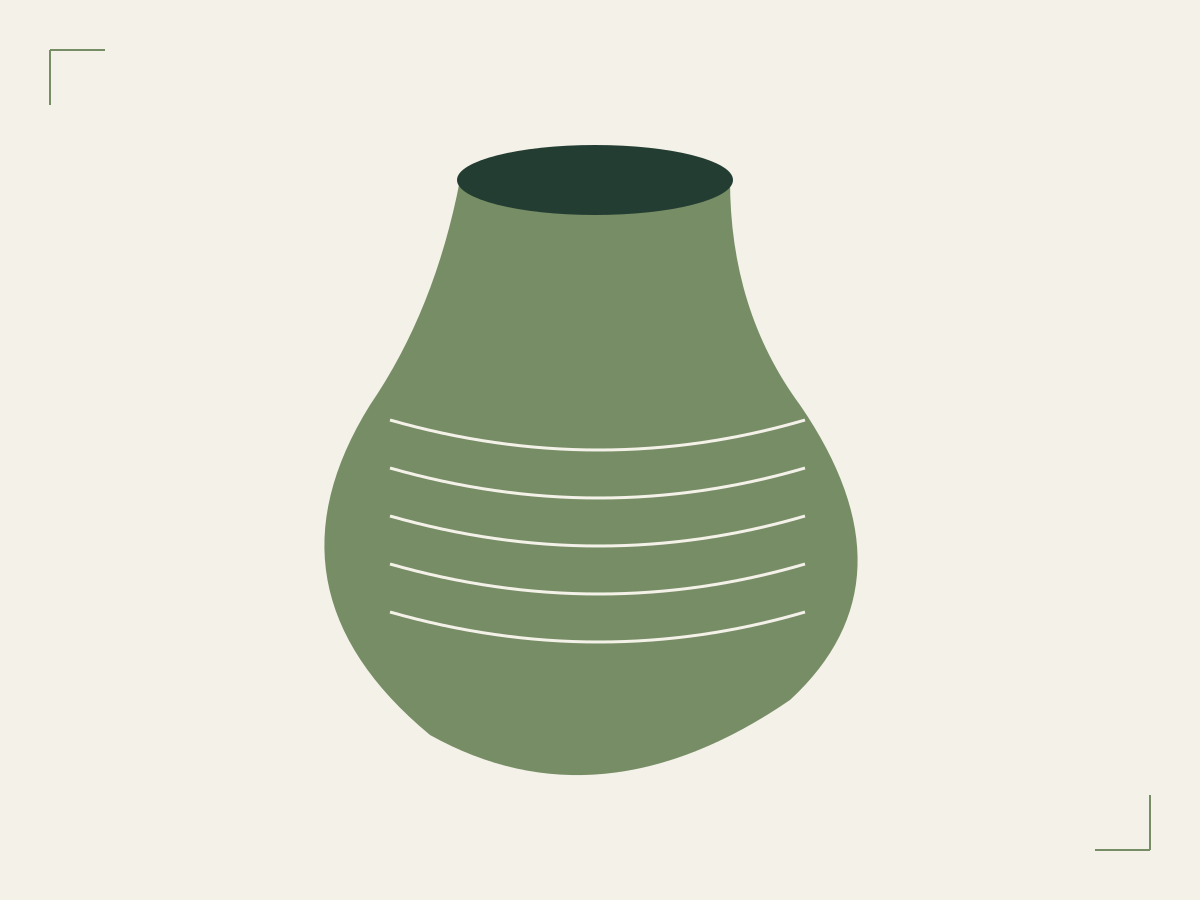
A hollow silhouette is a small study within Rim & Hollow, our collection about vessel openings, rims and quiet proportions. The aim is to give one ordinary detail enough attention to become useful. Begin with vessel openings, keep a pencil and a form notebook nearby, and let the exercise set the scale of the session.
Draw the form
Draw the empty inner space as a shape. This is the central task for this page. Before beginning, write the subject as a short heading and leave space for a drawing or a few measured notes. Your first record should show what was actually in front of you rather than what you expected to find.
Begin with a drawing and a small hand-built study using a material you already know. Keep the aim narrow: a curve, an opening or a relationship between two shapes. These notes focus on form and observation. Follow the clay, glaze and studio instructions for handling, drying and firing any actual ceramic work.
A useful way to work
Draw the outside and the opening as separate shapes. View a piece from the side and from above before changing it. Draw the opening as carefully as the outer profile. Record the material and the stage at which each observation was made, because wet, dry and fired pieces are different references. A series of modest studies can reveal more than repeatedly correcting one ambitious object.
- Give this session a clear heading: A hollow silhouette.
- Draw the empty inner space as a shape.
- Draw the outside and the opening as separate shapes.
- Save one observation and one question in your own words.
Try a second pass
For a second pass, keep the subject of a hollow silhouette and change the way you record it. A short diagram can replace a long description; a paired comparison can replace a single impression. Keep the first attempt alongside the second so the difference remains visible. If the result is uncertain, name the uncertainty instead of filling the gap.
Keep the useful detail
Close the page with one sentence about vessel openings and one question that arose from this particular exercise. A wide and narrow opening offers a related direction: compare two openings on the same outer profile. The connection is a starting point, not a requirement to complete the journal in order.